Home » Dịch vụ kết nối » Dedicated Connectivity

Dedicated Connectivity

Customizable Layer 1, Layer 2, and Layer 3 channels aligned with your architecture, performance goals, and SLA expectations

KHÁM PHÁ NGAY

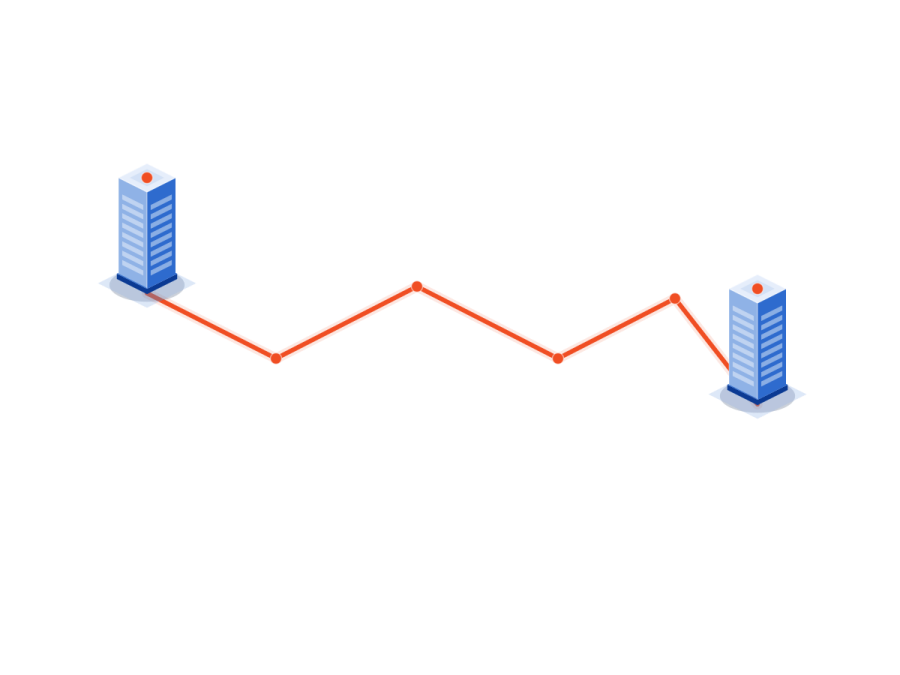
Dedicated connectivity services — global network and location infrastructure illustration
Private, enterprise-grade connectivity, engineered and managed end-to-end
IPTP Networks delivers Dedicated Connectivity as a single managed service. We design the right connectivity layer for your business scenario and operate it with clear SLAs, proactive monitoring and one point of accountability.
XEM THÊM

Why choose Dedicated Connectivity Services?

Predictable performance icon — dedicated bandwidth with guaranteed SLAs
Predictable performance
Dedicated bandwidth with SLAs covering uptime, latency, and capacity. Your traffic does not compete with other users for resources.
Private traffic isolation icon — private paths separated from the public internet
Private traffic isolation
Your data travels via private paths, separated from the public internet. Encryption can be added where required, and the service supports compliance requirements that need traffic separation.
Scalable bandwidth icon — capacity from low-bandwidth circuits to multi-gigabit services
Scalable bandwidth
Capacity grows with the business and can be anywhere between low-bandwidth circuits up to multi-gigabit services. Scaling is seamless with all changes carefully planned, scheduled, and tested beforehand.
High availability icon — redundant paths and automatic failover
High availability
Redundant paths and automatic failover reduce the impact of single-link or single-node events. SLAs define the availability target.
Cost predictability icon — fixed monthly pricing, no bandwidth overage charges
Cost predictability
Fixed monthly cost without bandwidth overage charges. This makes budgeting easier and lets finance teams reliably model network spending
Connectivity
Direct routing
Paths between your key locations—points of presence, branches, private/public clouds, and data centers—follow a deterministic design rather than the routing decisions of the public internet
IPTP Networks is an international infrastructure provider with a global backbone that operates dedicated connectivity services across all network transport layers. We help customers choose the right model for their use case rather than fitting them to a single product, and then run that service end-to-end.

Our work in this area typically combines three things: connectivity layers, network expertise, and managed support.

Yêu cầu báo giá

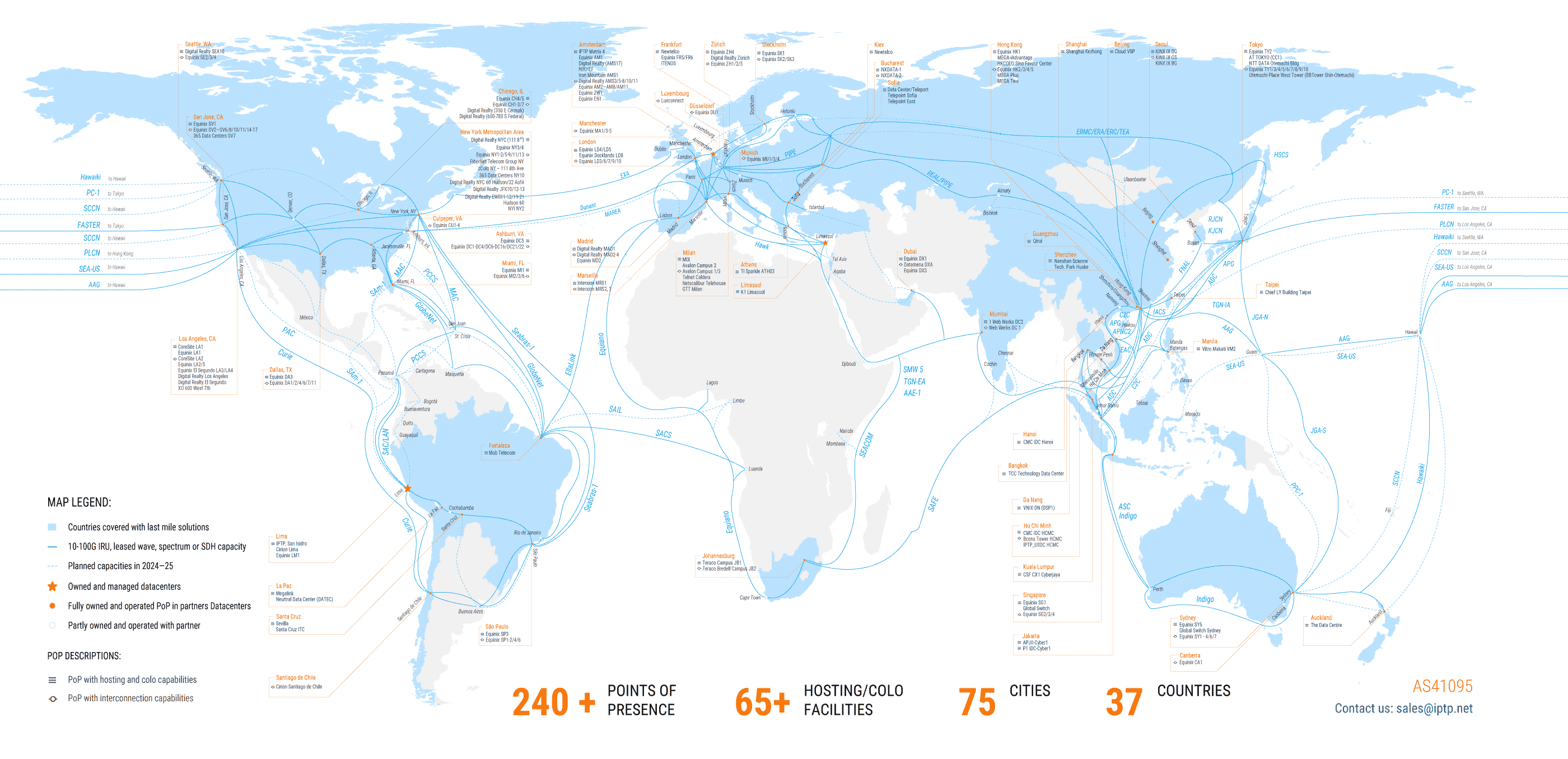
Global network and Points of Presence map

IPTP Networks global Points of Presence map — network coverage across Americas, Europe, Asia-Pacific, and Middle East

How the network is built

IPTPbuilds its network on four core technologies: MPLS and Ethernet overlaid over DWDM, and OTN. Each plays a distinct role in how the network performs.

OTN (Optical Transport Network)

OTN provides the global optical transport foundation that spans multiple continents, geographies, and cable systems. It enables a distributed network infrastructure with alternative path options for resiliency, low-latency routing, and reliable delivery across long-distance links.

DWDM (global scalability and high performance)

DWDM multiplies fiber capacity by transmitting multiple optical wavelengths over a single fiber pair, allowing large volumes of data to move across cities, regions, and continents. It provides high bandwidth, resilient transport, and low-latency performance for demanding dedicated connectivity services.

Ethernet (industry standard and universal compatibility)

Ethernet provides the standard interface between enterprise equipment and carrier-grade network services. Its compatibility with switches, routers and firewalls makes dedicated connectivity easier to integrate, manage and scale within existing infrastructure.

MPLS (intelligent network management and scalability)link

MPLS directs traffic through pre-defined network paths using labels instead of conventional IP routing. This gives more control, better efficiency, and more predictable performance. MPLS supports traffic engineering, QoS, fast re-routing, and scalable private network services across carrier infrastructure.

Industries that rely on Dedicated
Connectivity Services

Finance
and banking

Trading desks, inter-bank transfers, and settlement systems need secure, low-latency connections with predictable performance. Dedicated channels support traffic separation, encryption, and audit requirements according to financial regulations.

Telecom

Backhaul, core network links and cross-border capacity rely on dedicated transport. Dedicated channels offer carrier-grade reliability, fast provisioning, and SLA-backed performance that can be passed through to customers.

Enterprise
corporations

Global enterprises connect headquarters, branch offices, data centers, and cloud regions on a private WAN. Predictable, latency-optimized performance supports real-time collaboration, ERP, and unified communications across sites.

Media and
broadcasting

Live streaming, content distribution and real-time graphics need stable latency and near-zero loss. Dedicated channels provide the consistent transport these workflows depend on.

Data centers and
cloud infrastructure

Dedicated channels interconnect data centers across geographies and remove the unpredictability of the public internet. They support disaster recovery, load balancing, and direct connectivity to major cloud providers, including Amazon Web Services, Microsoft Azure, and other leading platforms.

Government and
public sector

Public-sector workloads have strict requirements on security, sovereignty, and compliance. Dedicated channels on private infrastructure—especially pseudowire channels where traffic separation, compliance, or legacy infrastructure requirements apply—can be designed to keep traffic on approved routes and inside approved jurisdictions.

KHÁM PHÁ NGAY

Connectivity portfolio

These three service groups run on IPTP's own managed infrastructure.
We configure each service to your requirements:
SLA parameters, routing path, bandwidth, and connection design
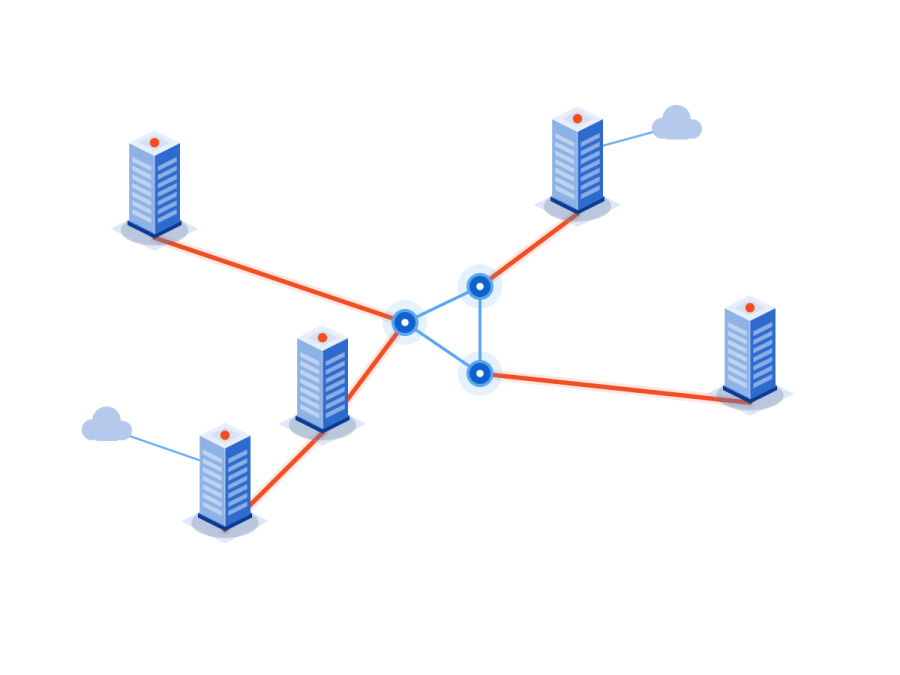
Dedicated connectivity services — managed Layer 2 and Layer 3 circuit illustration

Dedicated Connectivity Services

Dedicated connectivity services — managed Layer 2 and Layer 3 circuit illustration

Dedicated Connectivity Services

EoMPLS (flexible Ethernet over MPLS)link

Ethernet over MPLS creates virtual Ethernet circuits across an MPLS backbone, combining familiar Ethernet connectivity with MPLS traffic engineering, QoS, and scalability. It supports port-based and VLAN-based services, which makes it suitable for rapid deployment of private Ethernet connections.

MPLS L2 VPN (multipoint Layer 2 virtual private networks)link

MPLS L2 VPN connects multiple sites in a single private Layer 2 environment, allowing any-to-any communication while keeping traffic isolated. It is designed for organizations that need VLAN extension, distributed data center connectivity or flexible multipoint Layer 2 topologies. Unlike EoMPLS Pseudowire, which is point-to-point, MPLS L2 VPN supports multipoint mesh topologies.

MPLS L3 VPN (secure, managed private networks)link

MPLS L3 VPN provides isolated private networks across the IPTP backbone, connecting branches, headquarters, and data centers with predictable performance. It supports scalable site-to-site connectivity, defined bandwidth, route control, and traffic separation from other customers.

Metro Ethernet (metropolitan optical networks)

Metro Ethernet delivers high-speed Ethernet connectivity between sites in a single city or metropolitan area, using optical network infrastructure. It provides low latency, flexible topologies, and cost-effective bandwidth for offices, branches, and data centers in the same region.
Point-to-point circuit services — international leased line and EPL illustration

Dedicated Circuit Services

<Point-to-point circuit services — international leased line and EPL illustration

Point-to-point Circuit Services

IPLC (International Private Leased Circuit)link

Dedicated international point-to-point connectivity designed for predictable performance across countries and regions. IPLC supports low-latency, high-capacity transmission for business-critical global operations.

EPL (Ethernet Private Line)link

Point-to-point Ethernet connectivity with carrier-grade reliability and straightforward integration. EPL combines the simplicity of Ethernet with predictable dedicated service performance.

EoMPLS Pseudowire (Transparent Ethernet Transport)link

A point-to-point service delivering transparent Ethernet transport over an MPLS backbone, combining Ethernet compatibility with traffic control, QoS, and efficient routing across carrier networks.

Service transparency acceptance testing for IPLC and Pseudowire

Each transparent circuit service is tested before handover to verify end-to-end transparency, throughput, and circuit performance. Testing follows RFC 2544 and ITU-T Y.1564 methodologies.
Optical transport services — wavelength, dark fiber and DWDM infrastructure illustration

Optical Technology Services

Optical transport services — wavelength, dark fiber and DWDM infrastructure illustration

Optical Transport Services

Wavelength Services (dedicated wavelengths)

Exclusive use of dedicated optical lambdas on IPTP Networks’ fiber infrastructure for high-speed, protocol-transparent connectivity. They deliver high bandwidth, low latency, and physical-level isolation for customers that need maximum performance and control.

xWDM solutions (wavelength division multiplexing)

xWDM solutions, including CWDM and DWDM, allow multiple independent optical channels to be transmitted over a single fiber. This increases network capacity efficiently across metro, regional, and long-haul routes without deploying additional fiber.

Alien Wave (third-party wavelength transport)

Alien Wave lets customers or partner carriers transmit their own wavelength across IPTP Networks’ DWDM infrastructure while keeping control over modulation, FEC, and line rate. IPTP manages the optical transmission environment so the signal stays within agreed performance parameters.

Passive Wave (passive optical transport)

A dedicated wavelength over passive CWDM or DWDM infrastructure without active optical amplification in the path. It offers very low latency, full protocol transparency and a cost-effective option for metro and regional data center interconnects.

Dark Fiber (unlit fiber)

Exclusive use of unlit optical fiber strands. Customers deploy and manage their own active equipment. This provides maximum control, technology flexibility, physical isolation, and long-term scalability up to the limits of the fiber itself.

Dark Fiber Cross-Connect

Passive optical patch connections within the same facility or between nearby facilities, data centers, PoPs, or IXPs. IPTP manages the physical fiber infrastructure, documentation and continuity testing, while the customer operates their own active optics.

Why choose IPTP Networks for
Dedicated Connectivity Services ?

Global carrier-grade backbone icon — DWDM-enhanced fiber across multiple continents

Global carrier-grade backbone

IPTP Network operates a carrier-grade network across multiple continents, with DWDM-enhanced fiber paths, international gateway points and peering relationships with leading carriers. Routes for your service are designed against single points of failure.
SLA-backed service icon — written SLA covering availability and latency

SLA-backed service

Each Dedicated Connectivity service comes with a written Service Level Agreement covering availability, latency, restoration time, and reporting. SLA targets and remedies are part of the contract, rather than a marketing pitch.
Traffic engineering expertise icon — MPLS QoS and automatic failover

Traffic engineering expertise

Our MPLS practice covers traffic engineering, QoS design, route optimization and automatic failover. We tune paths to the priorities of your applications instead of leaving them to default routing.
24/7 Network Operations Center icon — around-the-clock monitoring and incident response

24/7 Network Operations Center

Our NOC operates around the clock with network engineers available for incidents and changes.
Direct provisioning support icon — fast circuit deployment with target delivery date

Direct provisioning support

Because our backbone and last-mile partnerships are in place, new circuits can be provisioned without the long lead times typical of fresh build-outs. We provide a target delivery date with each proposal.
Cost transparency icon — no bandwidth overage fees, clear pricing components

Cost transparency

Pricing is built on transparent cost components—including port, capacity, distance, last-mile, and SLA scope—with no bandwidth overage fees. Customers see what they pay for.
Vendor-neutral integration icon — compatible with Cisco, Juniper, Arista, and Nokia

Vendor-neutral integration

Our network interoperates with equipment from major vendors, including Cisco, Juniper, Arista, and Nokia. We design our services around your existing infrastructure instead of pushing a proprietary stack.
Global reach with regional support icon — international backbone with local engineering teams

Global reach with regional support

IPTP combines an international backbone with regional engineering and support teams. Customers get global coverage and expert support on the ground from someone who understands local context.

Câu hỏi thường gặp (FAQ)

01.

What are dedicated connectivity services and how do they differ from a standard Internet connection?

-
Dedicated connectivity services are private, point-to-point or multi-site connections with capacity reserved for one organization. Unlike public internet connections that share resources with other users, dedicated channels guarantee a fixed amount of bandwidth reserved for your organization. They come with SLAs covering availability, latency, and performance.
02.

What benefits do dedicated channels provide for businesses?

+
Predictable performance, traffic isolation, defined bandwidth, route control, and SLA-backed availability. Dedicated channels are designed for workloads where downtime, latency variation, or shared bandwidth would create real business risk. For business-critical and transactional operations, they also reduce the risk of lost or interrupted transactions that can occur over standard internet connections without guaranteed performance or a defined route.
03.

How secure are dedicated channels?

+
Dedicated channels keep your traffic on private paths separated from the public internet. They support encryption—including MAC encryption where it is required by the service model—network segmentation and traffic separation mandated by compliance requirements. Pseudowire channels provide an additional layer of isolation by encapsulating traffic as a point-to-point private circuit. The exact controls depend on the service model: IPLC, EPL, EoMPLS Pseudowire, MPLS L2 or L3 VPN.
04.

I need global presence. Can I get IPTP addresses in specific regions like Asia and Latin America?

+
Yes. IPTP Networks can help you establish a network presence in the regions where your business operates. We work with you to identify the right IP addressing and routing options for your geography, in line with applicable regional requirements. For more details on IP address services, see our IPv4/IPv6 Services page.
05.

What types of dedicated connectivity services does IPTP Networks offer, and how do I choose the right one?

+
We offer MPLS L3 VPN for multi-site enterprise WAN, IPLC for international point-to-point connectivity, EPL for transparent Ethernet private lines, and EoMPLS for Ethernet services over MPLS. The right choice depends on geography, latency, security, and scalability needs. Our engineers help match the service to your design. For a detailed overview of EPL, see the IPTP article “What is EPL”.
06.

How do you help us choose between L1, L2, and L3?

+
We start from your use case, locations, and SLA targets and map them to the right layer: L1 for deterministic point-to-point links (often international), L2 for Ethernet transparency such as DC interconnect or VLAN extension, and L3 for multi-site private WAN with managed routing and QoS. You receive a clear recommendation with a proposed design.
07.

What affects pricing?

+
The transport layer and service model (L1, L2, or L3) is one of the most significant pricing factors, as it determines the level of traffic isolation, transparency, and engineering complexity. Other factors include: geography and distance, last-mile availability at each site, port and committed capacity, required redundancy, SLA level (availability, restoration, performance, and reporting), and contract term.
08.

Can we combine MPLS with Internet or 4G/5G backup?

+
Yes. Hybrid is common: MPLS carries critical traffic that needs predictable performance, while Internet and/or 4G/5G provides backup or carries non-critical traffic. Failover behaviour and traffic priorities are designed so the service behaves predictably during transitions.
09.

Where does the SLA apply: access, backbone, or cloud?

+
The SLA (Service Level Agreement) covers the parts of the service we deliver and operate: access/last-mile when in scope, and our backbone. For cloud, the SLA typically applies up to the interconnect or on-ramp hand-off; performance inside the cloud provider’s network follows the provider’s own SLA. The customer LAN is covered only when included as a managed scope.
10.

What is the typical provisioning time?

+
Provisioning time depends on the last-mile and the service type. For on-net services, where IPTP infrastructure is already in place, delivery is on a Next Business Day (NBD) basis. IPTP currently covers over 230 on-net locations. For off-net services, lead times depend on last-mile availability, access build-out and cross-connect completion at the relevant facility. Expedite delivery options can be discussed for time-sensitive requirements. We provide a target delivery date with each proposal.
11.

How is the service monitored and supported after handover?

+
IPTP proactively monitors backbone utilization, availability, and service health around the clock from our NCC (Network Control Center). The NCC tracks anomalies, performance degradation, and availability events across the network, independently of individual SLA scope. Engineering staff are available 24/7 for incidents and changes. Customers receive periodic performance reports. Additional monitoring options and reporting scope can be defined in the SLA.

Khám Phá Ngay

Mở rộng toàn cầu, khởi động ngay hôm nay
Sẵn sàng vận hành trong 48 giờ —
IPTP Networks đảm nhiệm toàn bộ hạ tầng phía sau.

* bắt buộc

Cám ơn bạn đã đăng ký!

Có một số nội dung bắt buộc phải điền vào